
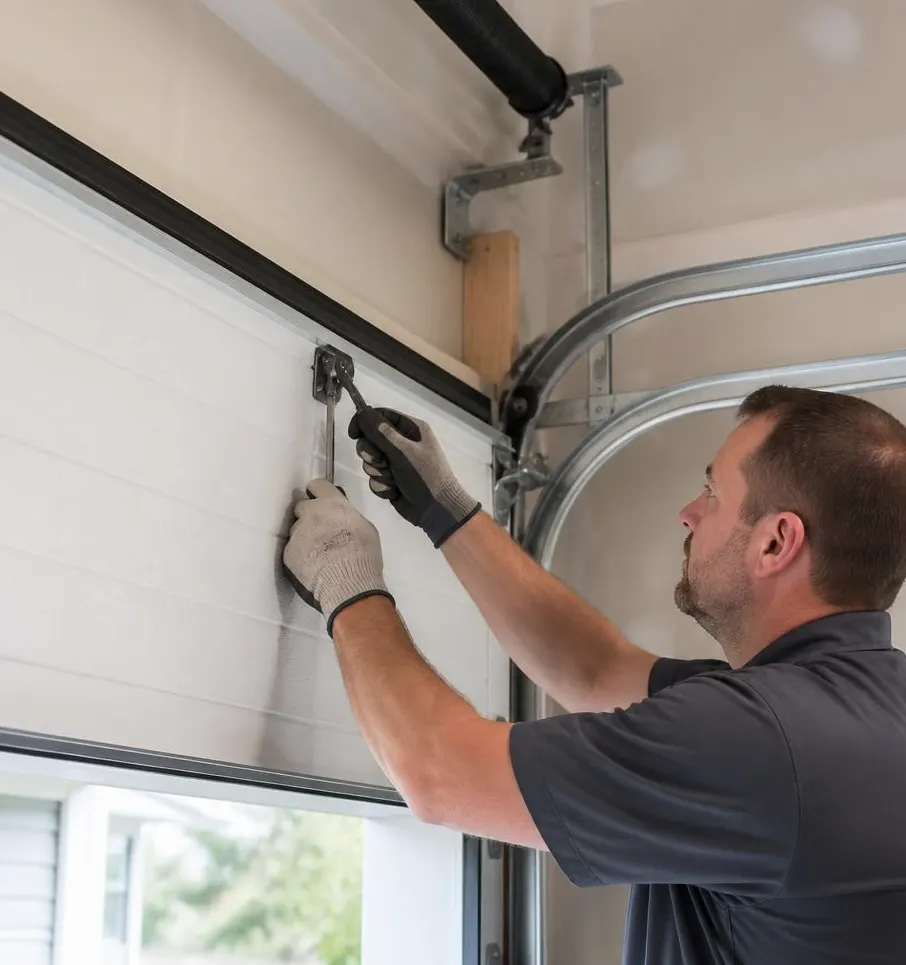
Rule of thumb: if your garage door jerks, scrapes, or hangs crooked at the same spot every time it moves, the tracks are bent or misaligned — not the springs or opener, even though those get blamed first. The exceptions are worth knowing: a failing cable or a losing-tension spring can mimic the same symptoms by letting the door hang unevenly, and a worn opener gear can cause hesitation that has nothing to do with the track at all. That overlap is exactly why a technician works through the possibilities in a set order rather than guessing.
Signs Your Tracks Are Bent or Misaligned
- The door hesitates, jerks, or shudders at the same point on every cycle
- You can see a gap between a roller and the track, or the door sits crooked in its frame when closed
- Grinding or scraping noise that's concentrated on one side of the door, not both
- The opener strains, reverses, or won't fully close because travel isn't smooth
- Rust streaks, flaking paint, or corrosion at the track seams and brackets
- Weatherstripping or a panel edge rubs against the frame on one side only
What Causes It — Checked in the Order a Technician Would Look
1. Impact Damage
This is the first thing a technician rules out because it's visible. A car bumper backing in too far, a bike or ladder leaned against the track, or a stray lawn tool can kink or dent the metal. The fix depends on severity: a mild bend in an aluminum or steel track can sometimes be carefully bent back into plumb with the right tools if the bracket underneath is still sound. A sharp crease or a cracked weld means the section gets replaced rather than reshaped, since a patched kink will just fail again under the door's weight.
2. Loose or Rusted Mounting Hardware
Vertical track is bolted to the door jamb; horizontal track hangs from the ceiling. Central Florida's humidity, rain splash, and salt-tinged air closer to the coast all accelerate corrosion on exposed fasteners and brackets. A bolt that's rusted through or simply worked loose lets the track drift out of plumb a little at a time, which shows up as that same-spot jerk. The fix is straightforward: remove corroded hardware, re-set the track with a level to confirm it's plumb and square, and replace fasteners with galvanized or stainless hardware so the repair holds up through the next rainy season.
3. Worn or Misaligned Rollers
Nylon rollers are quieter but can swell, crack, or wear unevenly with repeated heat-and-humidity cycling; steel rollers hold up longer but need lubrication to stay smooth. Either way, a roller that's worn down on one side pushes unevenly against the track every time the door travels, slowly bending it outward. The fix is roller replacement — matched in sets so the door tracks evenly on both sides — along with a check of the roller stems themselves, which can bend from the same stress that bent the track.
4. Door Panel Warping or Swelling
Afternoon downpours and persistent humidity cause wood panels to absorb moisture and swell slightly out of shape, while steel panels can develop a subtle bow from an old dent nobody noticed. Either condition pushes the panel edge against the track as the door rises and falls, gradually forcing it out of alignment. The fix is usually replacing the affected panel section and reconfirming that the remaining sections sit flush, since one warped panel will keep re-bending a freshly straightened track if it's left in place.
5. Cable or Spring Imbalance
A fraying cable or a spring that's lost tension lets one side of the door hang lower than the other. Every open-close cycle after that loads one track more than its partner, which is how a cable problem turns into a track problem over a few weeks. The fix starts with cable repair or spring replacement — springs are always replaced in pairs, even if only one has failed, because mismatched tension just creates the same imbalance again — followed by rebalancing the door so both tracks carry equal load going forward.
6. Wind Load Stress
Even a properly wind-load-rated door flexes under sustained hurricane-season gusts, and repeated flexing puts real stress on the brackets where track meets jamb and header. This tends to show up as a track that was fine before a storm season and isn't anymore. The fix involves checking reinforcement struts, confirming bracket anchoring still meets the door's wind-load rating, and upgrading or re-torquing hardware that's taken a beating from repeated flex.
When to Call Oviedo Garage Door Service
If the door is grinding, hanging crooked, or refusing to seat properly in the track, that's an Off Track Door Repair call rather than a DIY afternoon — tracks under tension can snap back and cause injury if handled without the right clamps and bars. A technician will check brackets, rollers, cable tension, and spring balance in the order above, straighten or replace what's bent, and confirm the door runs true on both sides before leaving. If the issue caught your eye early — a little noise, a slight hesitation — a Garage Door Tune-Up & Maintenance visit can catch loose hardware and rust before it turns into a bent track at all, which is the cheaper problem to have.
If your garage door in Oviedo, Winter Springs, Chuluota, Geneva, Casselberry, Winter Park, Altamonte Springs, or Sanford is jerking, scraping, or sitting crooked, call Oviedo Garage Door Service for a straightforward inspection and an honest fix — often with same day service available.