
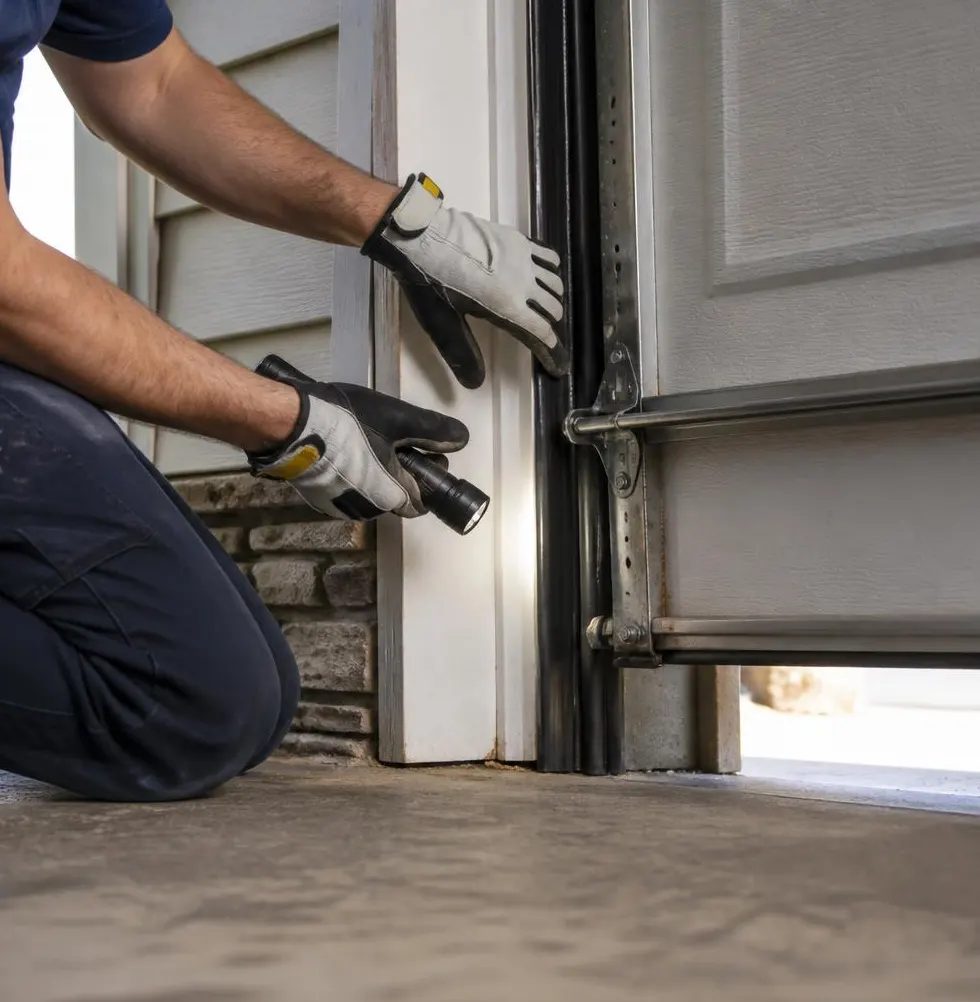
It's 10 p.m. and you're easing the car into the garage, trying not to wake anyone, when the opener lets out its usual racket — a grinding, rattling, banging noise that echoes through the house. Maybe it's been getting louder for weeks. Maybe Florida's afternoon downpours and the humidity that follows have finally caught up with hardware that used to run quiet. Either way, a noisy opener is rarely just "how it is." Most of the time it's a specific, fixable problem, and you can work through the likely causes in order before deciding whether it's a DIY job or one for a technician.
Tools You'll Want on Hand
- Socket wrench or ratchet set
- Silicone-based garage door lubricant (not WD-40 or grease, which attract dust and grit)
- Flashlight or work light
- Work gloves
- Step ladder
- Rubber isolation kit (sold for garage door openers, usually under $20)
Step 1: Tighten Everything Before You Touch Anything Else
Vibration loosens bolts over time, and in this area that happens faster than most homeowners expect. Hurricane-season winds put repeated stress on the whole door and track assembly, and even when a storm doesn't make landfall nearby, the wind load still rattles hardware loose. Grab your ratchet and go over every bolt holding the track brackets to the frame, the opener rail to the header, and the opener motor to the ceiling bracket. A loose bracket is one of the most common sources of banging noise, and it's also the easiest fix — fifteen minutes with a wrench, no parts needed.
Step 2: Lubricate the Moving Parts
Humidity is hard on garage door hardware. Hinges, rollers, and the opener's chain or screw drive all dry out or gather grit faster in Florida's damp air than they would in a dry climate. With the door closed, apply a silicone-based lubricant to the hinges, the rollers (not the tracks themselves), the torsion spring, and the opener's drive mechanism. Run the door up and down a few times to work it in. If squeaking or grinding drops noticeably, you've found a big piece of the problem. Plan to repeat this every few months — it's cheap insurance against the moisture swings here.
Step 3: Inspect the Rollers
Open the door partway and look closely at each roller as it moves through the track. Metal rollers with worn bearings tend to produce a sharp, rhythmic clacking; this is especially common on older doors or ones that see a lot of moisture exposure. Nylon rollers are quieter by design and a reasonable upgrade if you're hearing metal-on-metal noise. Swapping rollers is a job most comfortable DIYers can do one at a time, keeping the door supported and never removing more than one roller bracket at once. If a roller looks bent, cracked, or seized, replace it before it damages the track.
Step 4: Isolate the Opener from the Ceiling Joist
A lot of the "boom" you hear inside the house isn't the door at all — it's the opener motor transmitting vibration straight into the ceiling joist it's bolted to, which then carries the sound into living space above or beside the garage. A rubber isolation kit sits between the opener's mounting bracket and the joist, absorbing that vibration before it travels. This is a straightforward homeowner project: unbolt the mounting bracket, insert the rubber dampeners, and rebolt. It won't fix a mechanically worn opener, but on an otherwise healthy chain-drive unit, it can cut the noise dramatically.
Step 5: Check Chain Tension
A loose chain slaps against the rail every time the door opens or closes. Most openers have a tensioning nut near the motor head that lets you take up slack — check your owner's manual for the exact adjustment point. You want enough tension that the chain doesn't sag, but not so tight that it strains the motor. This is a five-minute adjustment with a wrench, but over-tightening can wear out the drive gear faster, so go slowly and recheck after a few open-close cycles.
Step 6: Know When It's the Opener Itself
If you've tightened, lubricated, replaced rollers, isolated the motor, and adjusted the chain, and the opener still sounds rough — especially a grinding noise that seems to come from inside the motor housing — the gears or drive mechanism are likely worn internally. This is also the point where chain-drive openers tend to show their age: chain-drives are inherently louder than belt-drives because metal link chains vibrate and clatter against the rail no matter how well-maintained they are. If quiet operation matters to you, or the internal gears are failing, a belt-drive swap is the real fix, not another round of lubricant.
What's DIY and What Isn't
- Homeowner-friendly: tightening hardware, lubricating hinges and rollers, swapping individual rollers, installing a rubber isolation kit, adjusting chain tension.
- Call a technician: diagnosing internal gear wear, replacing the opener's motor or logic board, converting from chain-drive to belt-drive, or any repair that involves the torsion spring under tension — springs store enough force to cause serious injury and should never be adjusted or replaced without the right tools and training.
When to Call Oviedo Garage Door Service
If you've worked through the list above and the door is still loud — or if you'd rather skip straight to a quiet, reliable setup — our team handles both ends of this problem. A Garage Door Tune-Up & Maintenance visit covers the lubrication, hardware tightening, and roller inspection in one trip, with an eye for anything the humidity and storm season have already started to wear down. If the opener itself is the real culprit, we offer Garage Door Opener Installation, including belt-drive units built for quieter operation and better moisture resistance than aging chain-drive models.
If your garage door in Oviedo, Winter Springs, Chuluota, Geneva, Casselberry, Winter Park, Altamonte Springs, or Sanford is grinding, banging, or rattling more than it used to, give Oviedo Garage Door Service a call — we'll track down the real cause and get it running quiet again, often the same day.